
From Paper Maps to Google Maps

Law firms that master context-driven AI will own the next decade.
The illusion of efficiency
Most innovation in legal is about efficiency and speed. Draft faster. Review smarter. Automate more.
That's a good thing. It's where we are right now.
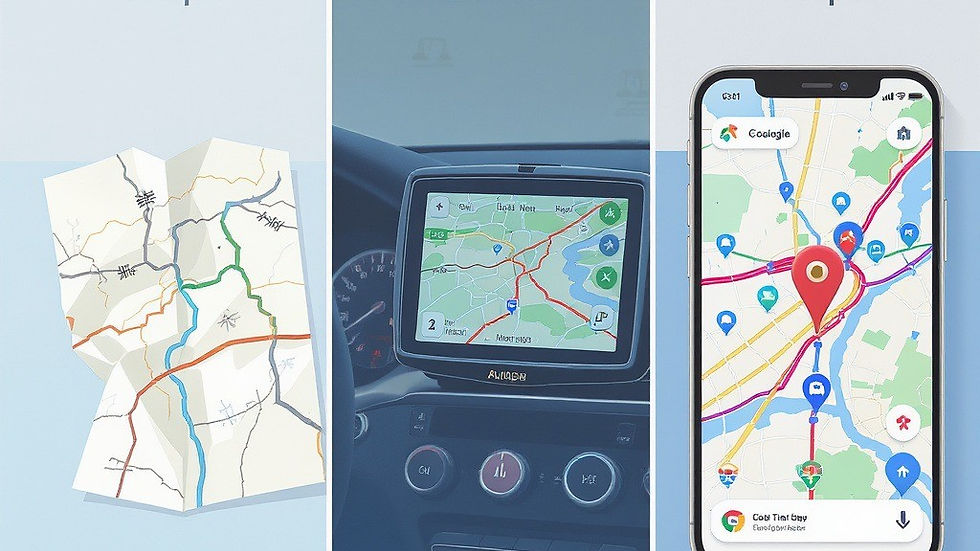
And it reminds me of the early 2000s when we were all swapping a paper map for these early-day GPS systems. It significantly improved the experience, and probably made driving safer. But it was still static. It didn’t tell you there was a traffic jam. Or that the road was closed due to construction.
Current legaltech is like those early GPS systems. They can follow directions from the playbook, and quasi-automate your drafting and reviewing based on rulesets. But they’re context-blind. They’ll route you through a dirt road or a closed bridge because they just don’t have the context.
And here’s the kicker: LLMs can’t learn this on their own, or by feeding them more case law. Because even with more case law, they still don’t have the context. They don’t know what happened last time, who’s in the room, or how much leverage you have today.
And that’s why we still need lawyers in the loop. Because they’re the only ones with lived judgment.
The GPS shift: Paper maps, early GPS, and Google Maps
Think about the road trip evolution:
Paper Maps: Like your playbook in MS Word. Useful, but dumb. You get the terrain, the driver will have to decide on the route. All judgment comes from the driver.
Early GPS: Like today’s AI tools. You can follow the theoretical directions from the playbook, but they’re context-blind. If circumstances change, if traffic is high, judgment will have to come from the driver.
Google Maps: The goal. It’s not just the map. It’s the context. It knows the traffic, the closures, the weather, your preferences, even your history. It doesn’t just give you a route. It gives you the right route, right now.
Law firms today? Some are still stuck in the paper map stage. Most are moving to early GPS. Current legal tech? Still early GPS. The future? Integrated legal navigation, powered by context, just like Google Maps.
Efficiency is nice. But it’s not navigation. Clients don’t hire lawyers for fancy maps. They hire them for guidance when the road forks, when the conditions change, or when the deal gets messy.
They want someone to say:
“If you push that clause, it’ll add three weeks of back-and-forth.”
“Procurement has already approved this fallback; don’t waste any more time here.”
“Quarter-end is next Friday. You have zero leverage. Close it.”
That’s legal navigation, powered by context.
The hidden opportunity: New business models
So what does that look like, integrated legal navigation, powered by context? Let's give some examples of how these new law firm offerings can look like:
Dynamic Playbooks Imagine a playbook that learns, remembers, and updates itself every time you negotiate. Not Word docs that sit on SharePoint. Real systems that evolve with every deal, and that in-house teams plug into their own legal technology.
Leverage Dashboards Real-time visibility into counterparty power, deal urgency, and fallback history. Not buried in emails. Visible to both business and legal.
Context Subscriptions Instead of selling hours, sell continuous access to your negotiation memory. Clients don’t just get lawyers when they call; they get live navigation built on thousands of past deals and they can inject it right into the legaltech they are already using.
This isn’t “better maps.” It’s a whole new category: legal navigation as a service.
And that's exactly what the Big Four are already doing in finance, procurement, operations... They don’t just provide advice; they’ve embedded themselves into their clients’ processes. Finance runs on their dashboards. Procurement functions lean on their frameworks. They’ve turned one-off audits into continuous navigation.
Law firms? Still mostly event-driven. Called in late. Asked to react. Delivering maps after the fact.
The firms that figure out how to move from reactive to integrated, structuring negotiation memory, surfacing leverage in real time, feeding context into daily business decisions, will stop being “outside counsel” and start being indispensable.
Why this is how firms win the next decade
Context is not public. It can’t be scraped. It's hidden in the heads of lawyers, in law firm archives. It's privileged information, and it walks out the door when people leave.
The firms that learn to capture and productize this context will be irreplaceable. Not because their AI is shinier. But because they can guide clients where others can’t.
Imagine your firm being the one with the AI that doesn’t just say what the clause means, but what the situation demands based on years of experience.
That’s how you move from service provider to an integrated strategic partner. That’s why legaltech vendors won’t replace you. And that’s why the firms that get this right will win the next decade. Not because their maps are prettier, but because they’ve built real navigation.


Comments